Boulder County · Since 2015
Attic Mold Remediation in Boulder, Colorado
Boulder homes have been renovated more aggressively than anywhere else on the Front Range, and attic mold here is very often a side effect of good intentions: a tightened envelope, new insulation, a high-efficiency furnace, and an attic that was never brought along.
Flat written quote after the inspection. Most attics encapsulated in one day.
Attic mold remediation in Boulder, CO at a glance
Attic mold remediation in Boulder, Colorado removes mold growth from roof sheathing, trusses and rafters and corrects the moisture source that caused it. Brothers Restoration, an IICRC-certified Denver-area remediation company founded in 2015, inspects Boulder attics free of charge, provides a flat written quote, and treats most attics in a single day using sanding where needed, an advanced peroxide treatment, a sporicidal encapsulant and ULV fogging. The work is documented with a before-and-after photo report that buyers, lenders and insurance adjusters accept.
Written and reviewed by Keith Peiker, owner of Brothers Restoration, IICRC certified in mold mitigation and an InterNACHI certified mold inspector.
- Service
- Attic mold remediation in Boulder, CO (Boulder County)
- Inspection
- Free, in person, with a written flat-rate quote
- Time on site
- Most attics treated and encapsulated in one day
- Method
- Sanding (as needed), peroxide treatment, encapsulation, ULV fogging, moisture-source correction
- Provider
- Brothers Restoration, owner-operated since 2015, IICRC and InterNACHI certified
- Documentation
- Before-and-after photo report; post-remediation clearance test on request
- Insurance
- Direct billing when the cause is covered
- Availability
- 24/7, scheduled to real-estate inspection deadlines
Attic mold in Boulder
What we find in Boulder attics
We treat attics from the 1890s Mapleton Hill Victorians to the mid-century ranches of Table Mesa to the foothills homes above town, and the remediation is always paired with a ventilation fix that respects what the owner has already invested in the house.
Mapleton Hill, Whittier and University Hill are older homes with steep roofs, multiple additions and attic spaces that have been partially finished over a century. Newlands and Chautauqua mix original bungalows with deep remodels. Table Mesa and Martin Acres are mid-century ranches with low-slope roofs and shallow attics. Pine Brook Hills, Wonderland Hill and the Flagstaff properties are foothills homes with shade, snow and wind. Across all of them, Boulder owners have air-sealed, insulated and electrified, which lowers energy use and raises attic humidity when ventilation is not adjusted to match.
Energy retrofits without ventilation
Dense-pack insulation and air sealing done well make the house tighter. Any moisture that still reaches the attic now stays there, and the roof deck is colder than it used to be.
Century-old additions
A Mapleton Hill house may have five roof sections built across a hundred years. Some attics connect, some do not, and the isolated ones grow mold quietly.
Foothills shade and snow
Pine Brook Hills and Wonderland Hill roofs sit in shade and hold snow. Cold decking plus any indoor moisture equals condensation staining.
Neighborhoods we serve in Boulder
- Mapleton Hill
- Newlands
- Chautauqua
- Whittier
- University Hill
- Table Mesa
- Devils Thumb
- Wonderland Hill
- Pine Brook Hills
- Flagstaff
How it shows up
Four signs you have attic mold
01
Dark staining on the roof sheathing
Black, grey or white blotching on the underside of the plywood or OSB, usually heaviest on the north-facing slope and near the eaves where the roof deck stays coldest.
02
Frost or drip marks in winter
Frost on nail tips and water spots below them mean warm house air is reaching the roof deck and condensing. The staining that follows is mold.
03
A bath fan or dryer that ends in the attic
The single most common cause we find. Every shower dumps a few pints of moisture onto cold wood.
04
Flagged on a home inspection
Most calls start here. The inspector photographs the sheathing, the buyer objects, and the clock is running.
The method
How we remediate an attic in Boulder
Six steps, the same every time, because the method is what makes the guarantee possible. Sanding is skipped when the growth is light; nothing else is.
Most Boulder attics: one day on site.
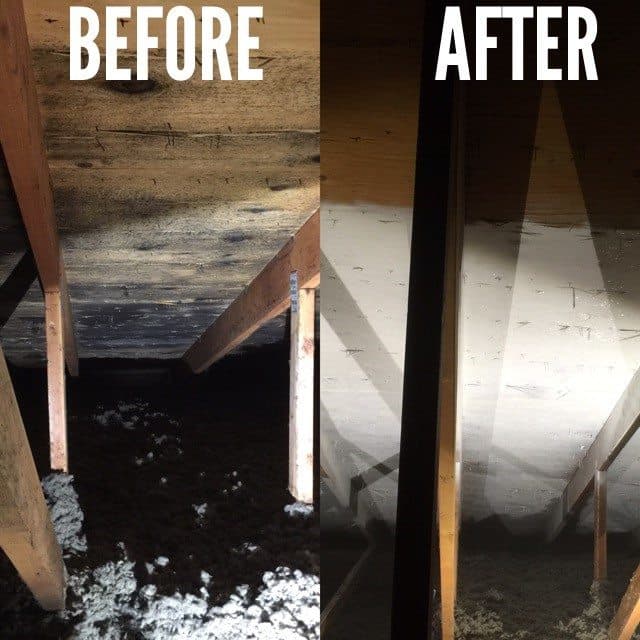
You get a before-and-after photo report and a written description of the moisture correction.
- 1
Free inspection and written quote
We get into the attic, trace where the moisture is coming from, photograph everything, and leave you with a flat written price. If mold is visible and growing we tell you to skip a pre-remediation air test and put the money into the fix.
- 2
Sanding where it is heavy
Thick colonies on sheathing, trusses and rafters are sanded back to clean wood. Tedious, but it is what makes the treatment stick. Not every attic needs it.
- 3
Advanced peroxide treatment
An industrial peroxide cleaner is applied to the stained areas. The oxidation lifts the staining and debris out of the grain and breaks down into oxygen and water, leaving nothing behind.
- 4
Encapsulation
With a commercial airless sprayer we coat every affected surface in a sporicidal, anti-fungal encapsulant. It kills what is there and leaves a sealed barrier that stops regrowth. Most attics are encapsulated in a single day.
- 5
ULV fogging
An ultra-low-volume fogger carries Concrobium Mold Control into every cavity the sprayer cannot reach. It is eco-friendly and safe around people and pets.
- 6
Fix the source, document the result
A remediation that leaves the bath fan venting into the attic is a remediation you pay for twice. We correct or specify the ventilation fix and hand you the photo report your buyer, lender or adjuster asks for.
Buying or selling in Boulder
Attic mold on the inspection report, closing date on the calendar
Boulder transactions involve informed buyers, detail-oriented inspectors and a strong preference for low-toxicity solutions. Our treatment uses Concrobium and an encapsulant that are safe around people and pets, and our photo report documents the cause and correction in the detail Boulder buyers ask for.
- Written quote the same day as the inspection
- Scheduled to your resolution deadline
- Photo report accepted by buyers and lenders
- Post-remediation clearance test when required
Tell us the date you are working toward.
We will tell you whether we can hit it before you hang up. Agents welcome.
720-979-2696Or send the inspection photos and we will call you.
Questions
Boulder attic mold questions
Anything we have not answered, call and ask. You will get a straight answer from someone who has been in the attic.
Are the products you use safe? We care about indoor air quality.
Yes. Concrobium Mold Control is eco-friendly and the encapsulant is safe around people and pets once applied. Nothing we use is a chlorine bleach product and the work is contained to the attic.
We just insulated and air-sealed the attic. Why is there mold now?
Because the attic got colder and the moisture that reaches it now has nowhere to go. The fix is ventilation designed for the new, tighter house, and we quote that alongside the remediation.
Do you work in the Boulder foothills?
Yes. Pine Brook Hills, Wonderland Hill, Flagstaff and the Sunshine and Fourmile canyon roads are regular service areas for us.
Does attic mold remediation require an air test first?
Not when the mold is visible and growing. A pre-remediation air test confirms what the photographs already show. We recommend putting that money toward the remediation and, if a buyer or lender requires it, doing a post-remediation clearance test instead.
Will my homeowners insurance cover attic mold?
It depends on the cause. Mold from a sudden event such as a storm-damaged roof or a burst pipe is often covered; mold from years of condensation or a bath fan venting into the attic usually is not. We photograph and document the moisture source so your adjuster has what they need, and we bill carriers directly when a claim is approved.
How long does the job take?
Most attics are treated and encapsulated in one day. Heavy sanding or a very large roof can add a second day. We schedule around inspection objection deadlines when a sale is in progress.
Do I need to leave the house?
No. The work is contained to the attic and the products we use are safe around people and pets once applied. You will hear the sprayer and the fogger for a few hours.
Will it come back?
Not if the moisture source is fixed. The encapsulant seals the wood and resists regrowth, and we will not sign off on a job that leaves the original cause in place.
Who shows up
Owner-operated since 2015
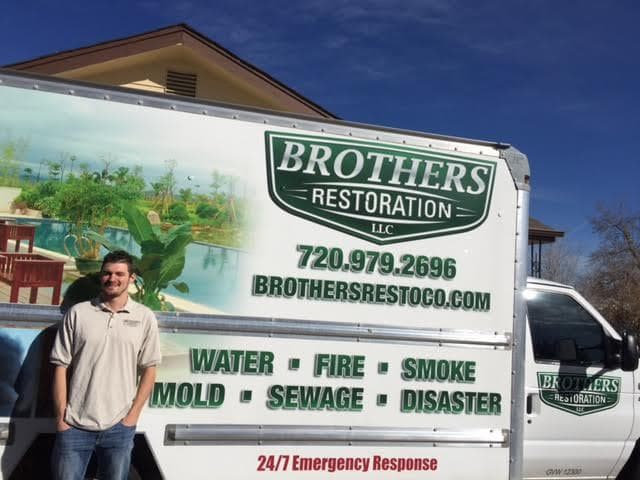
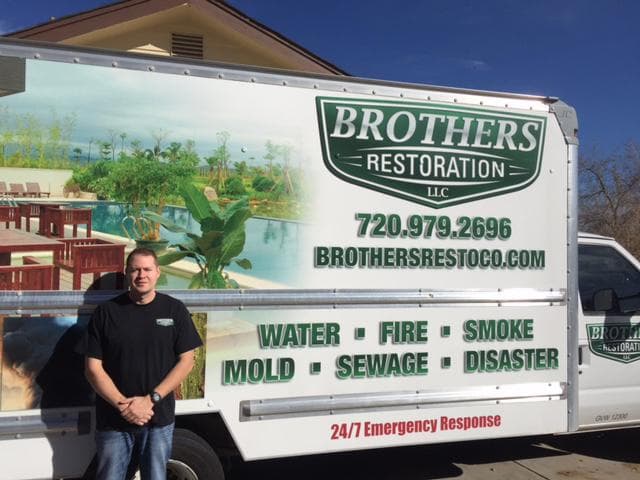
Brothers Restoration is owned and run by brothers Keith Peiker and Luke Henderson. Keith is IICRC certified in water damage, structural drying and mold mitigation and an InterNACHI certified mold inspector. The person who inspects your attic is the person responsible for the result, and the result is guaranteed.

IICRC Certified
Water damage, structural drying and mold mitigation
InterNACHI Certified Mold Inspector
IAC2 mold inspection certification
Service area
Attic mold remediation near Boulder
- Denver
- Louisville
- Superior
- Erie
- Broomfield
- Cherry Hills Village
- Greenwood Village
- Castle Pines
- Castle Rock
- Parker
- Lone Tree
- Highlands Ranch
- Littleton
- Centennial
- Golden
- Evergreen
Also see mold removal, mold testing and crawl space vapor barriers.
Free attic inspection in Boulder
We find the cause, photograph it, and leave you a flat written price.