
Douglas County · Since 2015
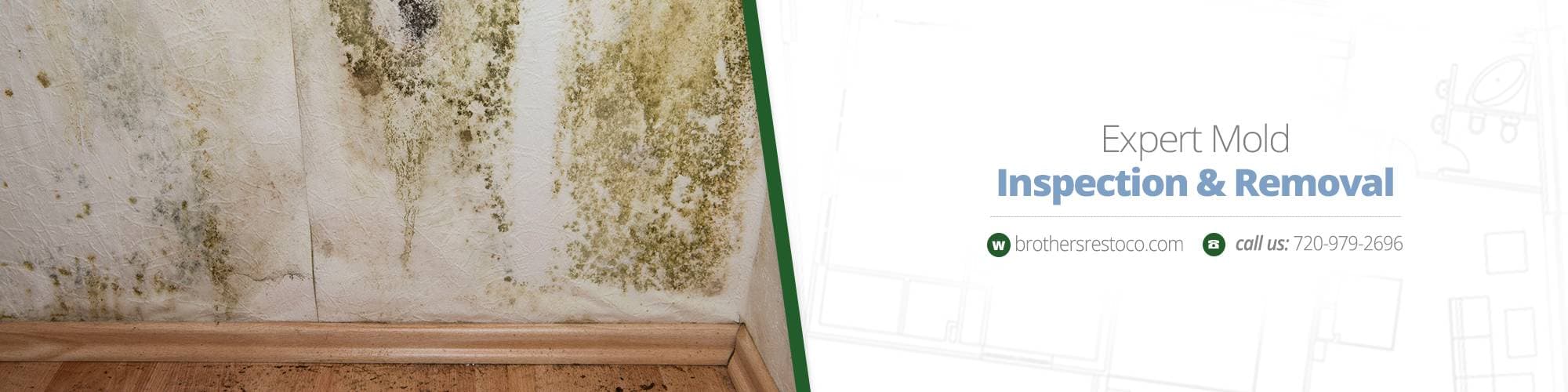
Attic Mold Remediation in Castle Pines, Colorado
Castle Pines sits in a ponderosa forest, and the trees are the first thing we think about when a homeowner here calls about attic mold. Shade keeps roof decks cold long after the sun is up, and cold sheathing is where condensation lands.
Flat written quote after the inspection. Most attics encapsulated in one day.
Attic mold remediation in Castle Pines, CO at a glance
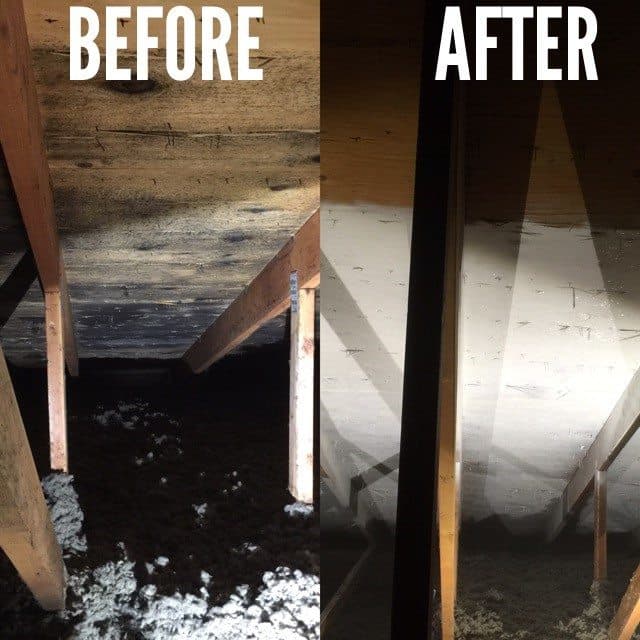
Attic mold remediation in Castle Pines, Colorado removes mold growth from roof sheathing, trusses and rafters and corrects the moisture source that caused it. Brothers Restoration, an IICRC-certified Denver-area remediation company founded in 2015, inspects Castle Pines attics free of charge, provides a flat written quote, and treats most attics in a single day using sanding where needed, an advanced peroxide treatment, a sporicidal encapsulant and ULV fogging. The work is documented with a before-and-after photo report that buyers, lenders and insurance adjusters accept.
Written and reviewed by Keith Peiker, owner of Brothers Restoration, IICRC certified in mold mitigation and an InterNACHI certified mold inspector.
- Service
- Attic mold remediation in Castle Pines, CO (Douglas County)
- Inspection
- Free, in person, with a written flat-rate quote
- Time on site
- Most attics treated and encapsulated in one day
- Method
- Sanding (as needed), peroxide treatment, encapsulation, ULV fogging, moisture-source correction
- Provider
- Brothers Restoration, owner-operated since 2015, IICRC and InterNACHI certified
- Documentation
- Before-and-after photo report; post-remediation clearance test on request
- Insurance
- Direct billing when the cause is covered
- Availability
- 24/7, scheduled to real-estate inspection deadlines
Attic mold in Castle Pines
What we find in Castle Pines attics
Add the complex rooflines of 1990s and 2000s custom homes, and you have attics that need to be read carefully rather than treated by formula.
The Village at Castle Pines and Castle Pines North were built with concrete tile, slate and heavy architectural shingle roofs on stucco homes with walkout basements and vaulted great rooms. Tile and concrete roofs run cooler than asphalt and hold snow longer, which is good for the roof and hard on the attic. Vaulted ceilings leave narrow rafter bays with almost no ventilation path. The newer construction in The Canyons has the tight-envelope moisture issues of any recent build, and these homes have barely had time to dry out.
Shaded, cold roof decks
A north slope under mature pines may never warm above freezing in January. Any humid air that reaches it condenses, and the staining pattern follows the shade line.
Vaulted ceilings with no path for air
The rafter bays above a vaulted great room are supposed to vent from soffit to ridge. Insulation stuffed tight in the bay blocks it, and those cavities grow mold where nobody can see it.
Tile roofs that hold snow
Snow that sits for weeks keeps the deck cold and finds every gap in the underlayment. Small, repeated leaks at valleys and penetrations feed mold on the sheathing below.
Neighborhoods we serve in Castle Pines
- The Village at Castle Pines
- Castle Pines North
- The Canyons
- Forest Park
- Hidden Pointe
- Kings Crossing
- Daniels Gate
How it shows up
Four signs you have attic mold
01
Dark staining on the roof sheathing
Black, grey or white blotching on the underside of the plywood or OSB, usually heaviest on the north-facing slope and near the eaves where the roof deck stays coldest.
02
Frost or drip marks in winter
Frost on nail tips and water spots below them mean warm house air is reaching the roof deck and condensing. The staining that follows is mold.
03
A bath fan or dryer that ends in the attic
The single most common cause we find. Every shower dumps a few pints of moisture onto cold wood.
04
Flagged on a home inspection
Most calls start here. The inspector photographs the sheathing, the buyer objects, and the clock is running.
The method
How we remediate an attic in Castle Pines
Six steps, the same every time, because the method is what makes the guarantee possible. Sanding is skipped when the growth is light; nothing else is.
Most Castle Pines attics: one day on site.
You get a before-and-after photo report and a written description of the moisture correction.
- 1
Free inspection and written quote
We get into the attic, trace where the moisture is coming from, photograph everything, and leave you with a flat written price. If mold is visible and growing we tell you to skip a pre-remediation air test and put the money into the fix.
- 2
Sanding where it is heavy
Thick colonies on sheathing, trusses and rafters are sanded back to clean wood. Tedious, but it is what makes the treatment stick. Not every attic needs it.
- 3
Advanced peroxide treatment
An industrial peroxide cleaner is applied to the stained areas. The oxidation lifts the staining and debris out of the grain and breaks down into oxygen and water, leaving nothing behind.
- 4
Encapsulation
With a commercial airless sprayer we coat every affected surface in a sporicidal, anti-fungal encapsulant. It kills what is there and leaves a sealed barrier that stops regrowth. Most attics are encapsulated in a single day.
- 5
ULV fogging
An ultra-low-volume fogger carries Concrobium Mold Control into every cavity the sprayer cannot reach. It is eco-friendly and safe around people and pets.
- 6
Fix the source, document the result
A remediation that leaves the bath fan venting into the attic is a remediation you pay for twice. We correct or specify the ventilation fix and hand you the photo report your buyer, lender or adjuster asks for.
Buying or selling in Castle Pines
Attic mold on the inspection report, closing date on the calendar
Castle Pines buyers are relocating executives and move-up families who hire inspectors that go into every attic. Discoveries here tend to be large because the attics are large and the mold has had years under a cool roof. We give sellers a fixed price quickly so a repair credit or a completed remediation can be agreed before the resolution deadline.
- Written quote the same day as the inspection
- Scheduled to your resolution deadline
- Photo report accepted by buyers and lenders
- Post-remediation clearance test when required
Tell us the date you are working toward.
We will tell you whether we can hit it before you hang up. Agents welcome.
720-979-2696Or send the inspection photos and we will call you.
Questions
Castle Pines attic mold questions
Anything we have not answered, call and ask. You will get a straight answer from someone who has been in the attic.
Can you work in the attic of a home with a tile roof?
Yes. We access the attic from inside, never from the roof, so the tile is never walked on. The remediation is the same; the ventilation fix is tailored to how tile roofs vent.
Our attic has vaulted sections we cannot see into. How do you treat those?
The ULV fogger is designed for exactly that. It carries the treatment into rafter bays and cavities the sprayer cannot reach, and we use inspection cameras to confirm the staining is covered.
Do you serve the gated Village at Castle Pines?
Yes. We work in the Village regularly and coordinate gate access with you or your agent before the appointment.
Does attic mold remediation require an air test first?
Not when the mold is visible and growing. A pre-remediation air test confirms what the photographs already show. We recommend putting that money toward the remediation and, if a buyer or lender requires it, doing a post-remediation clearance test instead.
Will my homeowners insurance cover attic mold?
It depends on the cause. Mold from a sudden event such as a storm-damaged roof or a burst pipe is often covered; mold from years of condensation or a bath fan venting into the attic usually is not. We photograph and document the moisture source so your adjuster has what they need, and we bill carriers directly when a claim is approved.
How long does the job take?
Most attics are treated and encapsulated in one day. Heavy sanding or a very large roof can add a second day. We schedule around inspection objection deadlines when a sale is in progress.
Do I need to leave the house?
No. The work is contained to the attic and the products we use are safe around people and pets once applied. You will hear the sprayer and the fogger for a few hours.
Will it come back?
Not if the moisture source is fixed. The encapsulant seals the wood and resists regrowth, and we will not sign off on a job that leaves the original cause in place.
Who shows up
Owner-operated since 2015
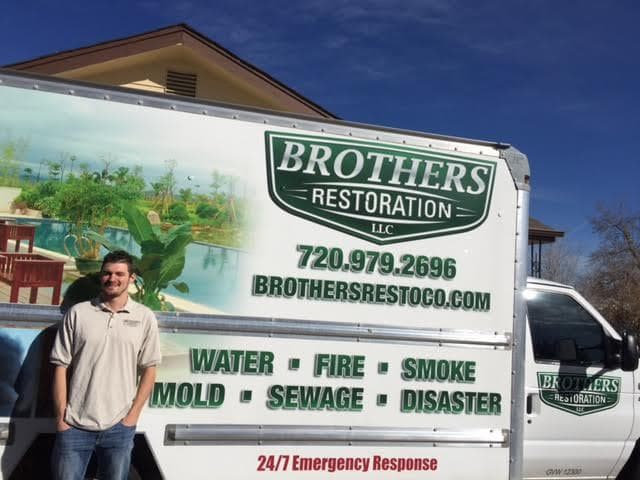
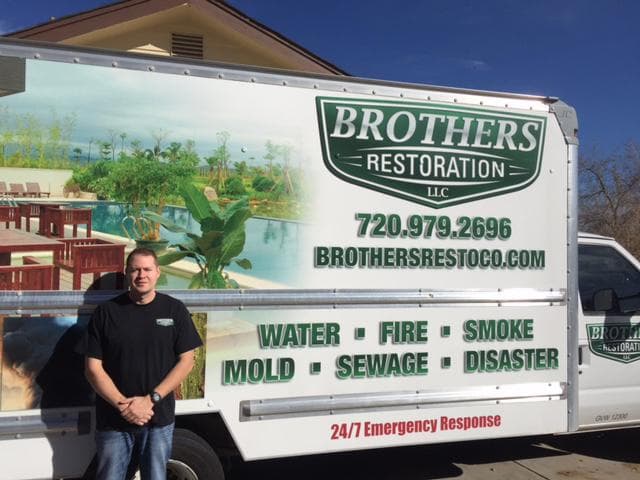
Brothers Restoration is owned and run by brothers Keith Peiker and Luke Henderson. Keith is IICRC certified in water damage, structural drying and mold mitigation and an InterNACHI certified mold inspector. The person who inspects your attic is the person responsible for the result, and the result is guaranteed.

IICRC Certified
Water damage, structural drying and mold mitigation
InterNACHI Certified Mold Inspector
IAC2 mold inspection certification
Service area
Attic mold remediation near Castle Pines
- Denver
- Castle Rock
- Lone Tree
- Highlands Ranch
- Parker
- Cherry Hills Village
- Greenwood Village
- Littleton
- Centennial
- Boulder
- Louisville
- Superior
- Erie
- Broomfield
- Golden
- Evergreen
Also see mold removal, mold testing and crawl space vapor barriers.
Free attic inspection in Castle Pines
We find the cause, photograph it, and leave you a flat written price.