
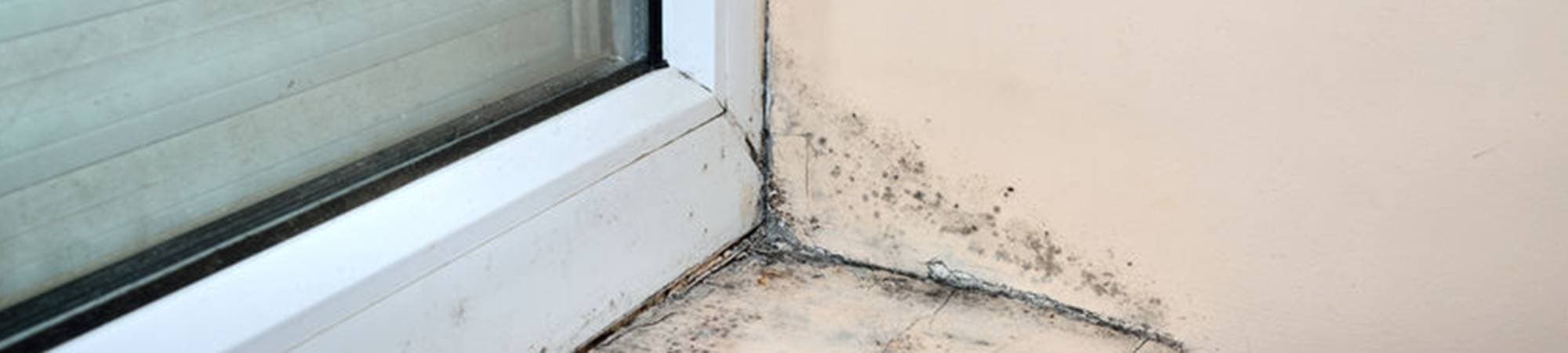
Mold Remediation in Castle Pines, Colorado
Brothers Restoration, Castle Pines Colorado
Castle Pines homes are large, newer and built on hillsides, and the mold we find here comes from water that the hill delivers and from bathrooms that were never vented well enough.
Call us at 720-979-2696 for a free mold inspection anywhere in Castle Pines, or use the estimate form to send us photos of your home and we will call you back with a ballpark number.
Mold Remediation in Castle Pines, CO at a glance
Mold remediation in Castle Pines, Colorado is the containment, removal and treatment of mold growth inside a home or business and the correction of the moisture problem that caused it. Brothers Restoration, an IICRC-certified Denver-area remediation company founded in 2015, inspects Castle Pines homes free of charge with moisture meters and thermal imaging, provides a written scope and flat estimate, and remediates under containment with HEPA air scrubbers: affected drywall, flooring and insulation are removed, framing is sanded, treated with an advanced peroxide cleaner, encapsulated and fogged, and the structure is dried with equipment, with air scrubbers running at least 72 hours. The work is documented with a before-and-after photo report that buyers, lenders and insurance adjusters accept.
Written and reviewed by Keith Peiker, owner of Brothers Restoration, IICRC certified in mold mitigation and an InterNACHI certified mold inspector.
- Service
- Mold remediation and removal in Castle Pines, CO (Douglas County)
- Inspection
- Free, in person, with moisture readings and thermal imaging; containment set up on the spot
- Job length
- One to two days of removal and treatment, then three to six days of dry-out; air scrubbers run at least 72 hours
- Method
- Containment, HEPA air scrubbing, removal of affected materials, sanding, peroxide treatment, encapsulation, ULV fogging, drying, moisture-source correction
- Provider
- Brothers Restoration, owner-operated since 2015, IICRC and InterNACHI certified
- Documentation
- Written scope, before-and-after photo report; post-remediation clearance test on request
- Insurance
- Direct billing when the cause is covered
- Availability
- 24/7 emergency response, scheduled to real-estate inspection deadlines
Why Castle Pines homeowners call us
Since 2015
Locally owned by brothers Keith Peiker and Luke Henderson
IICRC certified
Mold mitigation and structural drying
Free inspection
Written flat-rate quote, no air-test upsell
Direct insurance billing
We document the moisture source for your adjuster
Satisfaction guaranteed
Every job backed by our guarantee
Where we find mold in Castle Pines homes
Walkout and garden-level basements take runoff from the slope above, window wells fill in a heavy storm, and the tile roofs that define the area shed hail but can still let water in at a flashing. Each shows up as mold in a finished lower level or in a ceiling.
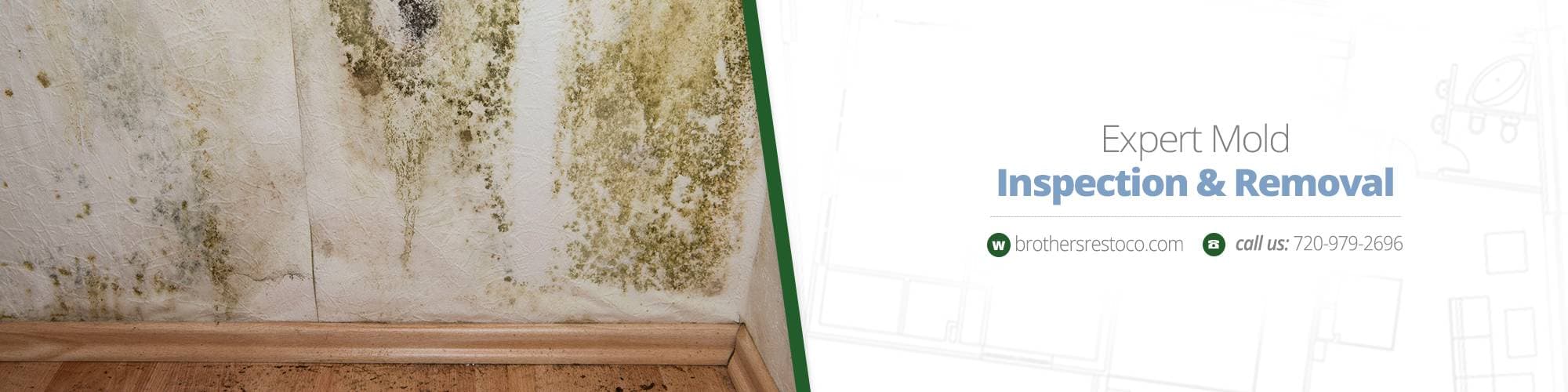
Castle Pines Village and the neighborhoods along the ridge are hillside homes with finished walkouts, big primary bathrooms and roofs that have taken repeated hail. We find mold behind lower-level drywall on the uphill side where runoff reaches the foundation, in window wells that drained into the basement, under primary bathrooms where a large soaking tub or steam shower was used for years with a weak exhaust fan, and in ceilings below roof penetrations that a hail storm compromised. The inspection maps the moisture first so only what is wet gets opened.
Hillside runoff into finished walkouts
The uphill foundation wall takes everything that comes down the slope, and the finished wall in front of it holds the moisture.
Window wells that flood
A clogged well drain and a hard summer storm put inches of water against a basement window and into the room behind it.
Large bathrooms with small fans
Soaking tubs and steam showers in a tightly built house need real exhaust. Without it, the ceiling and the wall cavity stay damp.
Neighborhoods we serve in Castle Pines: The Village at Castle Pines, Castle Pines North, The Canyons, Forest Park, Hidden Pointe, Kings Crossing, Daniels Gate.
When mold shows up in the house, we make it right.
Four signs you have a mold problem
- 1
A musty smell you cannot find
Mold you can smell but not see is usually behind a wall, under a floor or inside a cabinet where a slow leak has been feeding it. The smell is strongest in the morning and after the house has been closed up.
- 2
Staining that comes back after you clean it
Spots on drywall, grout or a window sill that return within weeks are growing from a moisture source behind the surface. Wiping the surface treats the symptom.
- 3
Water damage that was never dried properly
A burst pipe, a failed water heater, an overflowing tub or a roof leak that was mopped up but not dried with equipment leaves wet framing and drywall, and mold follows within days.
- 4
Flagged on a home inspection
Basements, bathrooms and the area under sinks are where inspectors find it. The buyer objects, the lender may require a clearance test, and the clock starts the day the report lands.
How we remediate mold in Castle Pines
Seven steps, the same every time. Containment goes up at the inspection, the air scrubbers run from the first cut to at least 72 hours after treatment, and nothing is signed off until the framing reads dry and the cause is fixed. You get a written scope up front and a photo report at the end.
- 1
Free inspection and written scope
We arrive on time, in shoe covers, with moisture meters, a humidity gauge and thermal imaging, and find every area holding moisture, not just the one you can see. If mold is found we set up containment on the spot, close the HVAC vents in that area and leave you a written scope of damage with a flat estimate.
- 2
Required testing
Colorado law requires drywall, tile and ceiling texture to be tested for asbestos before it is disturbed. When the job involves those materials the test is included in the estimate and expedited, and work starts as soon as it comes back clear.
- 3
Containment and air scrubbing
The affected area is sealed off and HEPA air scrubbers run throughout the job so spores stay inside the containment and out of the rest of the house.
- 4
Remove what cannot be saved
Mold-affected drywall, carpet, padding, insulation and cabinetry that cannot be cleaned are cut out, bagged inside the containment and removed. Our goal is to save as much as possible, and we tell you what can and cannot be kept before we touch it.
- 5
Treat the framing
Studs, joists and subfloor that stay are sanded where growth is heavy, treated with an industrial peroxide cleaner that lifts staining out of the grain, coated with a sporicidal encapsulant, and fogged with Concrobium Mold Control to reach the cavities a sprayer cannot.
- 6
Dry it out
Air movers and dehumidifiers run until the framing reads dry on the meter, and the HEPA air scrubbers run for at least 72 hours after treatment. Depending on how wet the structure was, dry-out takes three to six days, and we check the readings every day.
- 7
Fix the cause, document, rebuild
A remediation that leaves the leak in place is one you pay for twice, so the moisture source is corrected or specified before we sign off. You get a before-and-after photo report and the information a contractor needs to rebuild, and we can refer licensed, BBB-accredited contractors for the reconstruction.
Buying or selling in Castle Pines
Mold on the inspection report, closing date on the calendar
Castle Pines listings are inspected by buyers paying for a well-kept home, and mold in a finished basement or primary bathroom undercuts that immediately. We produce a written scope the same day, remediate under containment inside the inspection window and document the result with a photo report.
- Written scope and flat estimate the same day as the inspection
- Scheduled to your resolution deadline
- Photo report accepted by buyers and lenders
- Post-remediation clearance test when required
Tell us the date you are working toward. We will tell you whether we can hit it before you hang up. Agents welcome.
Castle Pines mold remediation questions
Anything we have not answered, call and ask. You will get a straight answer from someone who has been in the home.
Our basement flooded through a window well. Is there mold already?
If the carpet and drywall were wet for more than a couple of days, almost certainly. We meter the wall and floor, remove what is wet, treat the framing and dry the structure, and tell you how to keep the well from doing it again.
Does hail damage lead to mold?
Often. A compromised flashing or cracked tile lets water into the roof deck and ceiling cavity, and the leak is not noticed until a stain appears. We find the wet area with thermal imaging and remediate the ceiling, and your roofer handles the roof.
Is the work covered by insurance?
Storm damage and sudden leaks usually are. We document the cause so your adjuster has what they need and bill the carrier directly when the claim is approved.
Is it black mold, and does that matter?
Mold comes in many colors and several of the dark ones are common household species. Any mold growing on building materials over a moisture source needs the same response: contain it, remove what cannot be saved, treat and dry the structure, and fix the cause. We treat every job to that standard regardless of color.
How long does mold remediation take?
Most residential jobs are one to two days of removal and treatment followed by a dry-out period of three to six days with air scrubbers running at least 72 hours. Small bathroom or under-sink jobs are at the short end; a flooded finished basement is at the long end.
Will my homeowners insurance cover it?
Often, when the mold came from a sudden event such as a burst pipe, an appliance failure or storm damage. Mold from long-term neglect, humidity or a leak that went unaddressed usually is not covered. We document the cause so your adjuster has what they need and bill carriers directly when a claim is approved.
Do I need a mold test first?
Not when mold is visible. A pre-remediation test confirms what the inspection already shows. We recommend putting that money toward the remediation and doing a post-remediation clearance test if a buyer, lender or landlord requires one.
Do we need to move out?
Usually not. The work area is contained and the air scrubbers keep spores out of the rest of the home. A whole-basement job or a kitchen remediation can mean living around equipment for a few days, and we tell you what to expect at the inspection.
Owner-operated since 2015
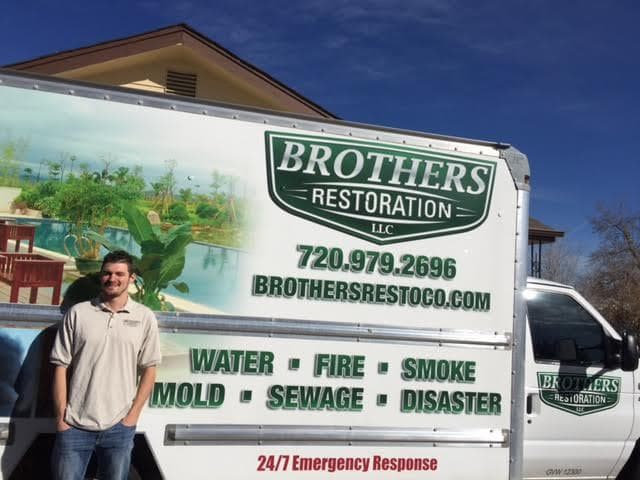
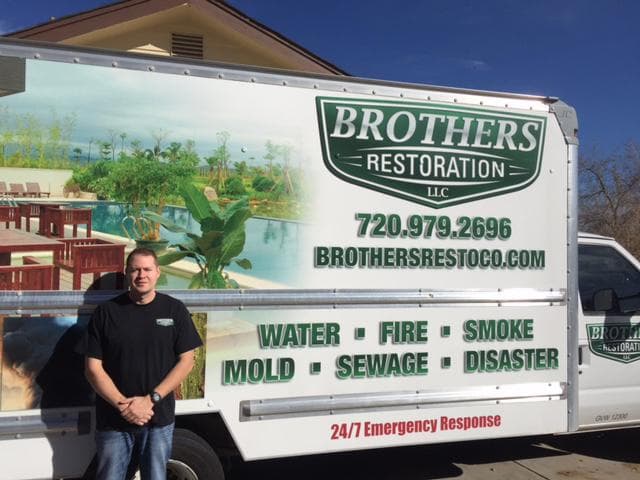
Brothers Restoration is owned and run by brothers Keith Peiker and Luke Henderson. Keith is IICRC certified in water damage, structural drying and mold mitigation and an InterNACHI certified mold inspector. The person who inspects your home is the person responsible for the result, and the result is guaranteed.

IICRC Certified
Water damage, structural drying and mold mitigation
InterNACHI Certified Mold Inspector
IAC2 mold inspection certification
Mold remediation near Castle Pines
Nearby: Denver, Castle Rock, Lone Tree, Highlands Ranch, Parker.
Also serving: Cherry Hills Village, Greenwood Village, Littleton, Centennial, Boulder, Louisville, Superior, Erie, Broomfield, Golden, Evergreen.
Also in Castle Pines: Attic Mold Remediation, Crawl Space Vapor Barriers, Crawl Space Mold Remediation.
See also water damage restoration, mold testing and the mold remediation process.
Free mold inspection in Castle Pines
We find the moisture, contain the growth and leave you a written scope with a flat price. Call the second you see mold.
Call 720-979-2696